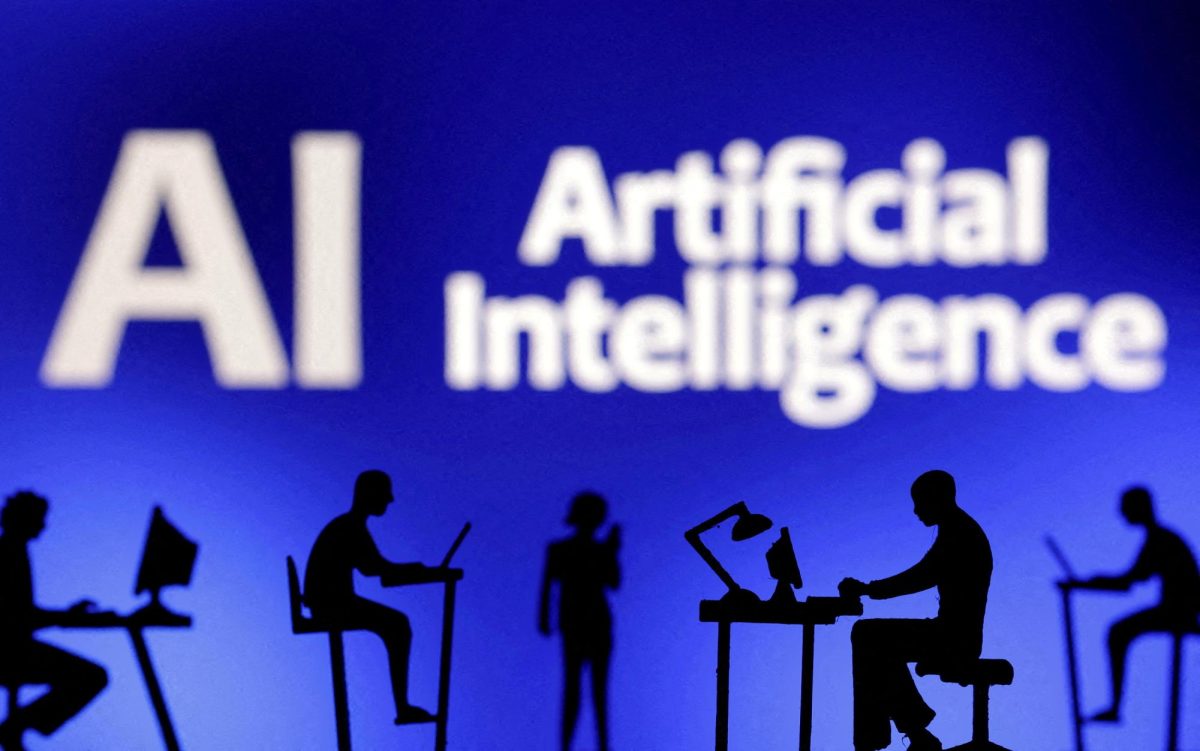
For some viewers of the annual Super Bowl, the best part of the most-viewed sporting event of the year is what happens when football isn’t on TV: the advertisements. The ads this year followed similar themes to years previous, featuring cameos from famous actors, comedians, and artists. There were also, of course, a few cheesy tear-jerkers breaking up the comedic skits. But among these familiar companies was an influx in commercials advertising Artificial Intelligence.
Companies such as Amazon, Meta, Squarespace, Google, Open AI, Ring, and others advertised new AI features they offer, often including emotional or comedic aspects to their commercials to appeal to wider audiences. Squarespace’s commercial, for example, depicted a young woman finding success in her small-business after using Squarespace AI to create her website for her. These storylines are so wholesome, but do they accurately portray the reality of these companies’ overall global impact?
While Artificial Intelligence has benefitted society by advancing medical tactics and aiding in scientific discoveries, the negative impacts of increased global AI use are undeniable. Not only can AI sources be extremely biased and inaccurate, but they also require an extensive amount of valuable resources just to function. AI data centers consume an enormous amount of electricity, and they require copious amounts of water for cooling purposes due to the heat energy they emit. According to a study conducted by the MIT Technology Review, the 3,000+ datacenters housing AI servers and cooling units across the United States use millions of gallons of fresh water per day in order to make up for the heat generated by various exchanges of energy. In light of the United Nations’ declaration of global water bankruptcy, it is more important now than ever to prioritize addressing environmental concerns in any way possible, even through small choices such as avoiding usage of AI.
In addition to ecological concerns, AI poses a major threat to the institution of academics as a whole. Siyona Pathak (11) is a dedicated student at Parkland High School as well as the student correspondent to the community library. “I think the benefits [of using AI] will never ever outweigh the negatives. In fact, I see no real benefits to using AI. Yes, it speeds up work; however, when I think back to even 3 years ago, deadlines and productivity were not pressing issues that plagued the work environment. Saying that it ‘makes things more productive’ is a cheap way of saying nobody wants to think critically anymore,” she states. In addition, a report from the Center of Democracy and Technology concluded that 85% of teachers and 86% of students used AI throughout the 2024-25 school year. This ultimately led to a decrease in meaningful relationships between students and their teachers, decreased collaboration with peers among students, and a dramatic increase in teachers’ concern for their students’ critical thinking and research skills.
Each of the Superbowl ads promoting AI showcased the best possible outcome of AI usage. Ring displayed how the AI feature on their camera doorbells can help detect lost dogs and return them; Open AI’s ChatGPT ad focused on a family-run farm that relies on ChatGPT to carry out organizational tasks; and Amazon’s Alexa commercial even pokes fun at Chris Hemsworth’s concerns about his safety being in the hands of AI. While these ads portray an almost utopia-like world in which AI can only benefit the development of the human race, never once do they mention the environmental and academic erosion caused by increasing dependency on Artificial Intelligence. “When they [powerful corporations] use AI to promote their company or ingrain AI into their databases, they are explicitly showing the world that they have no regard for safety, security, and the environment and that they actively participating in the processes which destroy our world and societies as we know it,” Pathak elaborates. This world has reached a point in time where artificial intelligence has been blended into daily lives in the form of search engines, social media, and mainstream marketing, and it is essential to remain cognizant of society’s potential future if AI use continues to increase at the dramatic rate that it already is.