
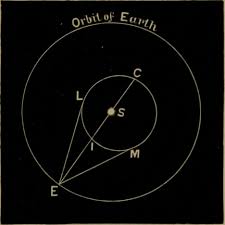
Mercury- with its bright pink glow- came into sight on February 19th, as it reached its greatest elongation. Mercury is at its furthest point to the east of the sun. In the east, this means that Mercury will follow behind the west-setting sun at the longest possible distance. This will cause Mercury to be visible in the sky for a short time after sunset. For the west, Mercury will rise before the Sun. They will make it visible just before sunrise.
This event is fascinating, as Mercury is usually invisible due to the Sun’s brightness. Mercury rising high above the horizon lets it be seen in the twilight. During this time, Mercury appears to look like a half-moon, shifting into a crescent or gibbous shape as it travels. The elongation tends to last anywhere from a few days to a few weeks, the next one said to occur as early as the 3rd of April this year. This phenomenon happens roughly every 3-4 months due to how quickly Mercury’s orbit is. Mercury’s eccentric (squashed) orbit means the maximum angle tends to vary between 18° and 28° degrees.
To see the planet, it is best to look around half an hour to an hour after sunset or before sunrise. It also helps to find a spot with little to no tall trees and buildings, as Mercury stays close to the horizon during these elongations. Remember to look to the stars to see the fascinating phenomenon of Mercury’s greatest elongation.